Austin, Texas Credit Repair
Turned down for the mortgage? Your reports may hold part of the answer.
Denied for the apartment? Still waiting on the business loan? Told no on the credit card? We read your reports line by line, explain what we find in plain English, and talk through what can actually be done about it.
No obligation — you decide whether to go further.
A declined application has a way of stopping plans cold — the house in Leander, the truck for the job, the apartment near campus. Sometimes the reason is straightforward: income, debts, the terms of the loan. Sometimes it lives in the fine print of your credit reports, where a wrong balance, a payment marked late that wasn't, or an account that isn't yours can change how a lender sees you. When the information is wrong, it deserves a second look.
We work with people across Austin and Central Texas — Round Rock, Cedar Park, Pflugerville, Georgetown, Leander, San Marcos, and the towns between — entirely by phone and online. The work starts with a careful look at what Equifax, Experian, and TransUnion are each reporting, then an honest conversation about what may be challenged and what can't be changed. Accurate negative information generally stays put; we say that up front, because a plan built on a promise nobody can keep helps no one.
Most people come to us with a goal in mind: a first home in one of the subdivisions rising around Liberty Hill, a dependable car for the I-35 drive, a lease closer to downtown, a rate that doesn't punish them for someone else's mistake. Others just want to know why their score looks the way it does. Either way, the first step is the same — a credit report review that goes through your file line by line. After that, you'll know what may be wrong, what is accurate, and what your options are. You can request a consultation or call and tell us what happened in your own words.
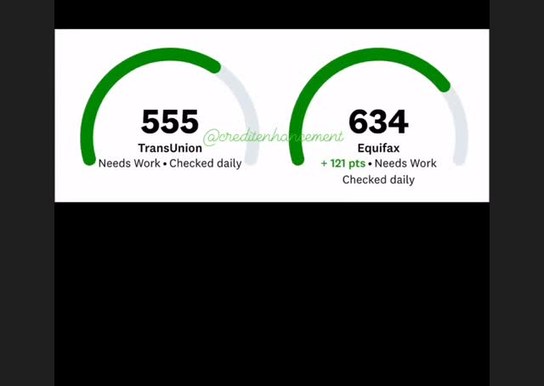
These are actual results from past clients, previously shared on Instagram. Every credit file is different, so treat these as examples of what the process can look like, not as a promise of what yours will do.

Client approved for an HSBC card with a revolving credit line of 3,500 dollars, June 2019.

Client approved for a USAA Rewards American Express card with a credit limit of 15,000 dollars, June 2019.

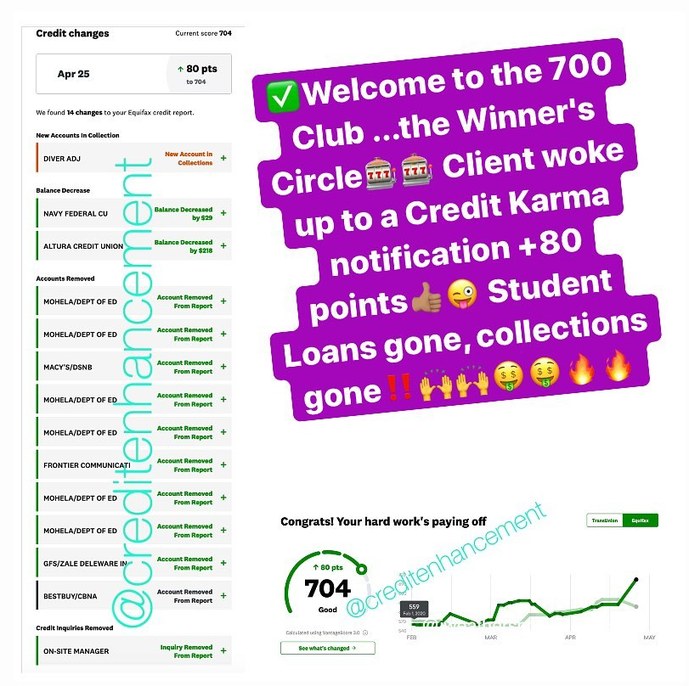
Equifax score up 80 points to 704, with six MOHELA student loan accounts and other entries removed, April 2020.
Results vary from person to person and depend on what is in each credit file. Nothing here promises a particular score increase or deletion.
Austin moves fast — a new apartment near the Domain, a house in Leander, a truck for the I-35 drive. When the answer comes back no, or the rate comes back higher than it should, the reason is usually sitting on your reports. For a dollar, you can see your scores from all three bureaus — Equifax, Experian, and TransUnion — and read what's actually there before your next application. No hiring anyone, no commitment — just the information, so your next move is based on facts instead of guesswork.
Your first look runs through MyScoreIQ at $1 for 7 days, then $34.99 a month after that if you keep it. Cancel anytime.
Five services, one starting point: understanding what's actually on your reports. Whether you're preparing for a purchase, sorting out a collection, or building credit from the ground up, there's a clear next step.
See what the three bureaus are reporting about you, and find the entries worth a closer look.
Learn more →Challenge information that looks wrong with disputes built on specific facts, not form letters.
Learn more →Make sense of collection accounts and charge-offs — what they are, and what can be done about them.
Learn more →Get your credit in order before you apply for a home or a vehicle, while there's still time to fix things.
Learn more →Build habits that protect your progress — steady payments, manageable balances, and reports you understand.
Learn more →Not sure where to begin? Start with a credit report review — it shows you what's on your reports before any decisions get made. If something looks off, error correction takes on entries that appear inaccurate. Collections and charge-offs get their own careful review, because the details matter before you answer any collector. Mortgage and auto readiness prepares you for a specific application, and credit building runs alongside the rest — the habits you build now are what keep your progress in place later.
Three steps, explained plainly. No jargon, no pressure, and no obligation at any stage.
We gather what Equifax, Experian, and TransUnion are reporting about you and go through it together in plain language — what's helping, what's hurting, and what looks wrong. You see everything we see, and we answer your questions before anything else happens. Learn about the review →
When an entry looks inaccurate, incomplete, or unsupported, we build a specific, factual dispute around the exact problem — a wrong balance, a wrong date, a duplicate entry, an account that isn't yours. Every dispute names what's wrong and explains why. Learn about error correction →
While disputes are in progress, we help you build habits that protect your progress — on-time payments, manageable balances, and a clear understanding of how your credit works. The goal is a file you understand and can keep in good shape yourself. Learn about credit building →
Everything happens by phone and online, whether you live in central Austin or one of the surrounding towns. There's no office to visit and no paperwork to mail unless a dispute calls for it — and if it does, we'll walk you through exactly what's needed. Request a consultation to start with step one.
On your first call, we'll ask what you're working toward and what's already happened — a denial, a rate quote, a collection notice, or a score that just doesn't look right. Then we'll explain what a review of your reports would cover. The first look shows you where you stand. Going further is your decision. Nothing gets filed, disputed, or changed without your say-so, and you can stop at any point. That first conversation teaches you something either way — many people walk away understanding their reports better even if they choose not to proceed.
People come to Austin for a reason — a job in tech, a seat at the University of Texas, work in state government, a stage to play on — and nearly every arrival brings a credit decision with it: a lease, a car note, a mortgage, a first apartment. Credit reporting is confusing at the best of times, and it gets harder when you're staring at a denial letter or a collection notice you didn't expect. We started this service around a simple idea: people deserve explanations they can actually use, not hype and not pressure.
Our team combines credit report review, hands-on customer support, and plain-language financial education. We walk through your reports with you, point out what may be inaccurate, and talk through what comes next — including when the honest answer is that an entry is accurate and will stay. We serve Austin and the surrounding Central Texas towns, from Georgetown and Round Rock down to Buda, Kyle, and San Marcos, all by phone and online.
There are no shortcuts here, and we won't pretend there are. A dispute works when it is specific and factual — one wrong balance, one date that doesn't match your records, one collection that belongs to somebody else. That's why every conversation starts with teaching: what's on your reports, what it means, and what can and can't be done. You can meet the team behind that approach, or read the questions people ask us most before you decide to reach out.
More about usOur team works from Austin, Texas, and serves customers by phone and online across Round Rock, Cedar Park, Pflugerville, Georgetown, Leander, Lakeway, Bee Cave, Dripping Springs, Buda, Kyle, San Marcos, Hutto, Taylor, Manor, Elgin, Bastrop, Lockhart, Liberty Hill, Lago Vista, Wimberley, Spicewood, and West Lake Hills.
Wherever you are in the Greater Austin region — downtown, a Hill Country town like Dripping Springs or Spicewood, or a growing suburb like Leander or Manor — you can reach us by phone or online. Every community has its own mix of goals, from a first apartment to a family home, and we start with yours.
The pages below explain what our services look like for people in each community.
We'll tell you what may be challenged and what generally can't be removed when the information is accurate. If an entry is right, we say so plainly — and talk about what you can still do with the rest of your profile.
A car loan, a mortgage, a lease, a rate that makes sense — we start with the obstacle in front of you. A first-time buyer in Round Rock and a renter near the UT campus need different conversations, and we begin with yours.
Ask questions, talk through your situation, and get answers in everyday language instead of financial jargon. You'll speak with a real person who knows your file — by phone or online, on your schedule.
Every service is available by phone and online, so you can get credit guidance from anywhere in our region — Georgetown to San Marcos, Lake Travis to Bastrop. No office visit, ever.
Disputes are one part of the work. We also explain payment history, credit utilization, account reporting, and everyday habits, so you understand your credit well enough to protect it after our work together ends.
A vehicle denial hits hard when you need reliable transportation for work and family. The reason isn't always your credit — income, current debts, the size of the loan, and the lender's own standards all play a part. But credit history is usually in the mix, and it's the part you can actually look at.
Late payments that weren't late, collection accounts that belong to someone else, balances that don't match your records, information that should have aged off — any of these can sit on your reports without you knowing. A credit report review goes through those entries with you, so you can see whether something factual deserves a dispute.
We also talk through the rest of the picture: recent applications, outstanding balances, and payment patterns, and how each may shape your overall profile. The aim is better information before your next financing decision. No one can promise a lender will approve an application, change a rate, or decide a particular way — and we won't pretend otherwise.
A denial usually arrives with an explanation. Lenders generally send a notice listing the main reasons for the decision, and those reasons often point directly at the credit report. A credit report review compares what the lender saw with what the three bureaus are reporting, so you can tell whether the problem is an error, an account that should have aged off, or an accurate entry that calls for a different plan. In a city where a dependable car matters for the drive up I-35 or out to a job in Round Rock or Cedar Park, that clarity is worth having before you apply again.
Timing counts too. Applying again right away adds another inquiry to your file, and a second denial doesn't help the application after that. Most people are better off reviewing their reports first, addressing anything that looks inaccurate, and then applying with a clearer picture. Our mortgage and auto readiness service walks through that preparation step by step, so the next application rests on information rather than hope.
A mortgage is the biggest financial commitment most people ever make, and the application runs through your credit reports before anything else. A lower profile than expected, a collection account, a late payment, or a balance that looks wrong can all raise questions — alongside income, debts, savings, and the loan program itself.
We help prospective buyers in Austin see what their reports contain before they get deep into the mortgage process. We go through the reported accounts, explain anything that may be inaccurate, and talk about responsible ways to handle outstanding obligations.
Accurate negative information doesn't disappear because it's inconvenient. A late payment or collection that is correctly reported generally stays, subject to the reporting rules. Knowing that distinction early helps you make realistic plans instead of chasing a fix that doesn't exist.
A mortgage lender weighs more than one number — payment history, outstanding balances, how long accounts have been open, anything on your reports that raises a question, plus income, debts, savings, and the program you're applying for. Starting early makes a real difference: reviewing your reports months before you apply gives inaccurate entries time to go through the normal dispute process, instead of surfacing days before closing on a home in Round Rock, Leander, or Buda. Our mortgage and auto readiness service is built around that kind of preparation.
The surprises that turn up most often are an old collection that resurfaced, the same debt listed twice under different names, a balance that doesn't match what you owe, and an account that belongs to someone with a similar name. Each one is worth a closer look through error correction, because a factual dispute starts by naming exactly what's wrong — not with a generic letter.
Getting approved doesn't always mean getting the rate you hoped for. Lenders set rates by their own standards, and your credit history may be one part of that decision. Outstanding balances, recent late payments, collection accounts, and other reported information can all shape how an application is evaluated.
Our review service helps you see the information that may be influencing your profile. We point out entries that appear inaccurate, explain how credit utilization works, and walk through how payment history and new applications fit into the bigger picture.
No single change guarantees a lower rate. Different lenders weigh things differently, and market conditions move borrowing costs on their own. Better information and steady habits can help you walk into the next application more prepared.
Two factors come up in nearly every rate conversation: payment history and how much of your available credit you're using. A late payment can weigh on a profile for years even after it's old, and high balances against your limits can signal risk to a lender even when every payment is on time. Our credit building guidance covers both — how steady payments and manageable balances fit together, and what to watch as you work toward a stronger profile.
All three bureaus matter here. The same account can be reported differently by Equifax, Experian, and TransUnion — different balances, different dates, sometimes an account that appears on one report and not the others. A credit report review looks across all three, so nothing gets missed because it only showed up in one place.
A collection account or charge-off on your report can be stressful, especially when you're not sure where the account came from or whether the amount is right. Before deciding anything, it helps to understand the account details, the reporting history, who owns it now, and its current status.
Some collection entries carry wrong balances, wrong dates, duplicate reporting, or information tied to the wrong consumer. Those problems may warrant a dispute with the bureau or the information provider. Accurate information generally cannot be removed simply because it puts you at a disadvantage.
We help customers tell collection accounts, charge-offs, and late payments apart, and we talk about practical habits that can prevent future reporting problems — reviewing statements, keeping track of due dates, and reaching out to creditors when money gets tight.
Before you answer a collector, get the facts straight: who the original creditor was, how much is claimed, what dates are attached, and whether the account is really yours. Collection accounts sometimes carry the wrong balance, the wrong dates, or the wrong consumer — and the same debt can appear twice if it was sold from one collector to another. Our collections and charge-offs service goes through each entry with you, so you understand what you're looking at before you decide what to do.
A charge-off and a collection aren't the same thing, though people often find both on one file. A charge-off means the original creditor wrote the account off its books; a collection means another company is now trying to collect it. Both can appear on your reports, and both may hold errors worth challenging through error correction when the reported facts are wrong.
Credit repair isn't only about fixing negative entries. Understanding how credit works helps you make choices that support your goals for years. Payment history, credit utilization, account age, credit mix, and new credit activity are among the factors that may shape credit scoring models.
Responsible habits look ordinary: pay on time, keep revolving balances manageable, review statements for errors, and skip applications you don't need. Those practices don't guarantee a particular score or lending outcome, but they build a steadier way of managing credit.
We believe customers deserve explanations they can use long after a consultation ends. We help people read their own reports, spot common reporting problems, and make informed choices about what comes next.
Lenders' scoring models look at a small set of things: whether you pay on time, how much you owe, the age of your accounts, how recently you've opened new credit, and the kinds of accounts you hold. Of those, payment history counts the most — one missed payment can leave a mark out of proportion to the slip, and a long stretch of on-time payments is the bedrock of any long-term plan. Our credit building service walks through each factor in everyday language.
Nothing about credit building is instant, and anyone promising fast results isn't being straight with you. The habits that work are simple and take discipline: pay on time, keep revolving balances in check, read your statements, and don't open accounts you don't need. A credit report review shows where you stand right now, so the habits you build target the right things.
Austin is Texas's capital, and its economy doesn't run on a single industry. Downtown is anchored by the Texas State Capitol — taller than the United States Capitol, finished in 1888. The University of Texas at Austin, founded in 1883, enrolls more than 53,000 students and drives the city's education and research economy. Austin carries the official slogan Live Music Capital of the World, adopted in 1991, and hosts South by Southwest and the Austin City Limits Music Festival in Zilker Park. Technology is woven through the city too: Dell started in a UT dorm room in 1984 and is headquartered in Round Rock, Tesla has its headquarters and Gigafactory Texas in the Del Valle area east of the city, and Samsung is building a major semiconductor plant in Taylor. Austin FC, the city's first major professional sports team, has played at Q2 Stadium since 2021, and Circuit of the Americas has hosted the United States Grand Prix since 2012. State government, technology, education, music, and small business all live in the same city — and credit problems show up in every one of those worlds.
That's why our services cover the whole region, not one neighborhood. Whether you live in Downtown, South Congress, Zilker, Hyde Park, Mueller, East Austin, Westlake, the Domain, or North Burnet — or in a surrounding community like Round Rock, Cedar Park, San Marcos, or Dripping Springs — you can reach us by phone or online, and the work is the same. There's no office to visit, so your neighborhood never limits the help you can get. See the full list on our service areas page.
The goals sound familiar wherever you go in the region: a first home in the suburbs, a dependable vehicle for work, a lease near the university or downtown, a better rate than the one you have now. Every one of those goals runs through your credit reports, and each one goes better when you know what's on them before you apply. Our mortgage and auto readiness service is built for that preparation, and a credit report review is where it begins.
The region's workforce shapes the credit stories we hear. Tech workers, state employees, university staff, musicians and service workers, construction workers, teachers, and small business owners all deal with the same lenders and the same reporting rules — but their files look different, because their lives do. Shift work, gig work, seasonal jobs, and job changes all leave marks on a credit file, and some of those marks are errors worth a second look. Wherever you work in the Greater Austin area, a credit report review starts with your file, not a template.

These are actual results from past clients, previously shared on Instagram. Every credit file is different, so treat these as examples of what the process can look like, not as a promise of what yours will do.

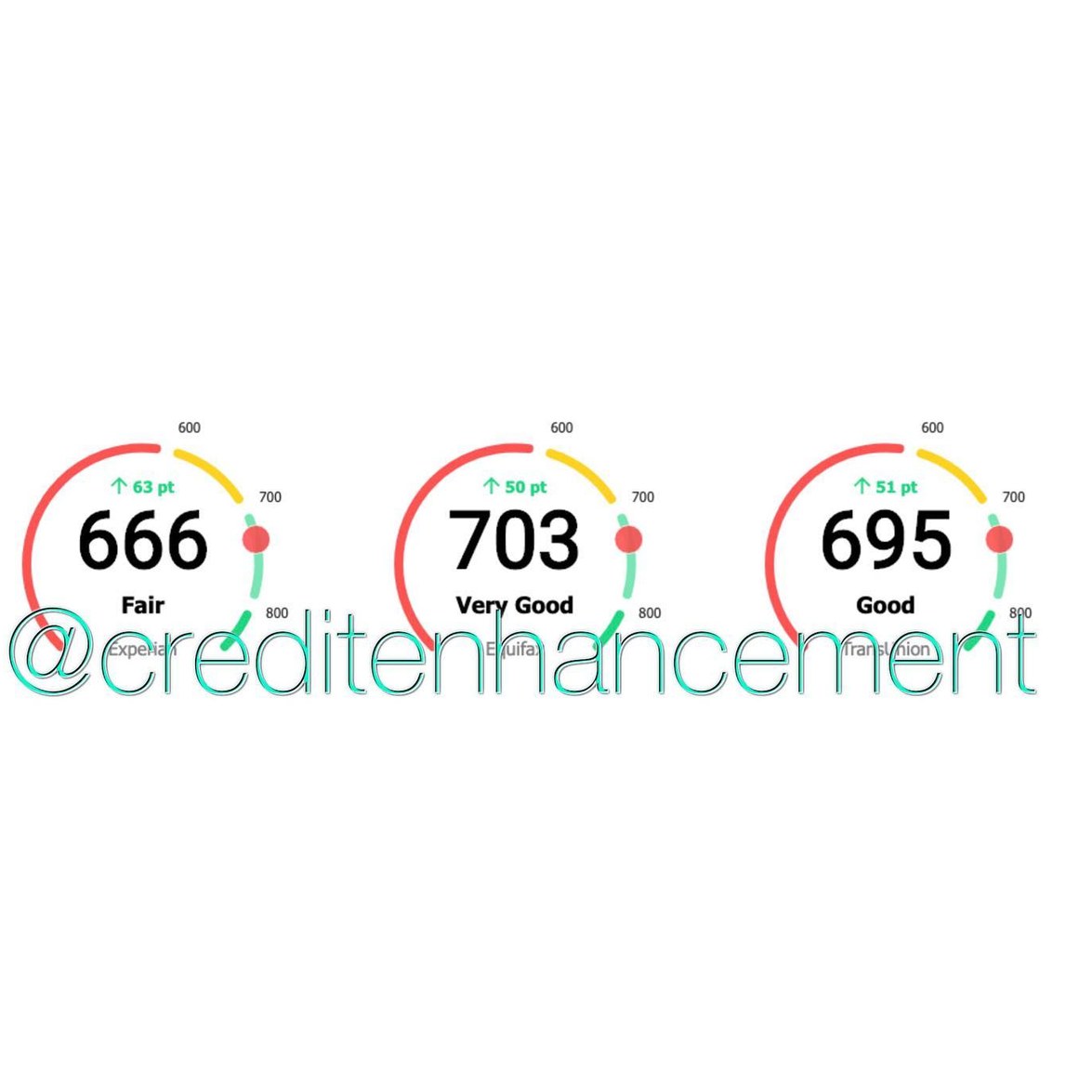
A client's scores rose on all three bureaus in May 2020: Experian up 63 points to 666, Equifax up 50 to 703, and TransUnion up 51 to 695.

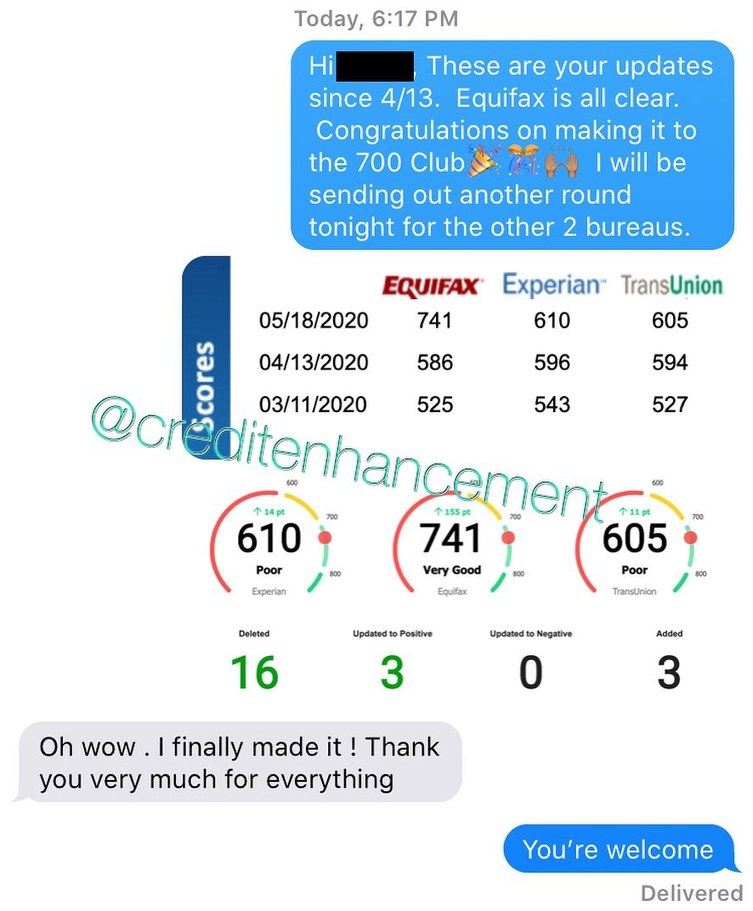
A client's Equifax score climbed from 525 in March 2020 to 741 in May 2020, with 16 items deleted along the way.

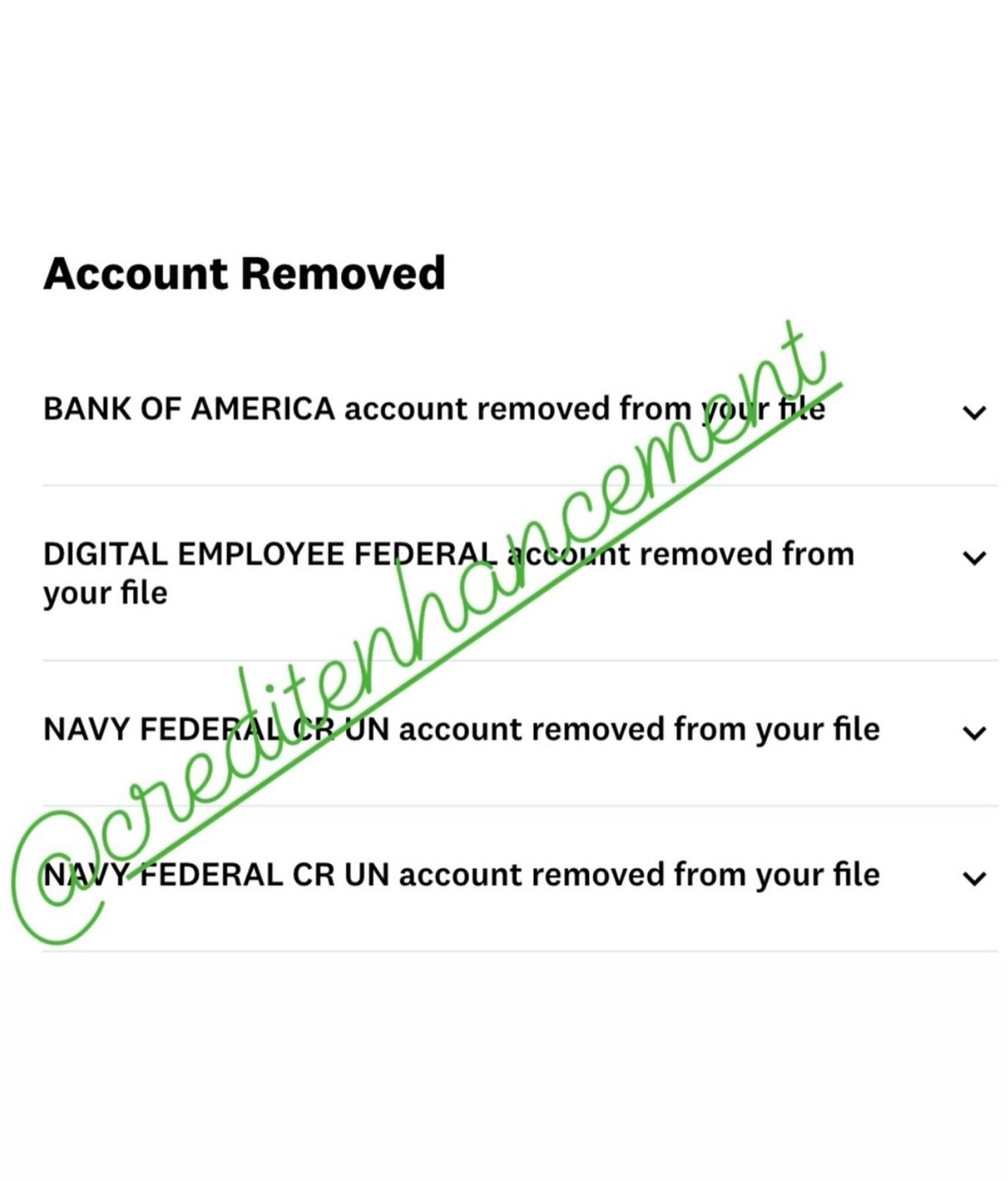
Four accounts removed from a client's file in February 2024: Bank of America, Digital Employee Federal, and two Navy Federal accounts.

A client's Experian FICO score rose 44 points to 723 in February 2024.

A client was approved for a Bank of America Business Advantage Credit Card in May 2020.
These are real results from past clients. Results vary from person to person and depend on what is in each credit file. Nothing here promises a particular score increase or deletion, and accurate negative information generally cannot be removed. Client names and account numbers have been removed from these images.
A review shows you what the lender may have seen — the accounts, balances, and payment history across your three reports — and whether any of it looks inaccurate. Lenders also weigh income, existing debt, loan terms, and their own underwriting, so reviewing your reports never guarantees approval on a future application. Our mortgage and auto readiness service can walk you through that preparation.
Start by finding out what the lender saw. Reviewing your reports can surface inaccurate entries or obligations you did not expect, before you apply again. Mortgage decisions also rest on income, debts, savings, the loan program, and the lender's underwriting criteria. Our mortgage and auto readiness service covers this preparation in detail.
Rates reflect more than one thing: your credit history, outstanding balances, payment patterns, the loan terms, and the market at the time you apply. Checking your reports can tell you whether anything on them looks inaccurate. A credit report review is the usual first step.
If the entry is inaccurate — the wrong balance, the wrong dates, or an account that is not yours — it may be challenged with the bureau or the information provider. Accurate collection information generally stays, even when it is unfavorable. Our collections and charge-offs service explains each entry before you decide what to do.
When a late payment is reported incorrectly — the wrong date, the wrong account, a payment that was actually on time — you may have grounds for a dispute. A payment that was genuinely late and correctly reported generally cannot be removed through an accuracy dispute. Our error correction service handles factual disputes of this kind.
Hard inquiries from applications may affect your score; soft inquiries, like checking your own reports, generally do not. Several mortgage inquiries in a short window are sometimes treated as one event by scoring models. A credit report review shows every inquiry on your reports.
A repossession may appear as an account entry and can weigh on how lenders view future applications. When the reported details are wrong, the entry may be challenged. Our collections and charge-offs service can help you understand what is being reported.
Yes. Student loan balances, payment history, and account status can appear on your reports. When that information is reported incorrectly, it may be challenged through a factual dispute. If the information looks wrong, error correction may be the next step.
Bankruptcy information may remain on your reports for a period set by the reporting rules. We can walk through what is listed and talk about responsible habits for the years ahead. Our credit building service covers habits for the years after a bankruptcy.
Judgment information may appear depending on the reporting rules and the public record information available. When it is inaccurate, it may be challenged through a factual dispute. Our error correction service handles factual disputes of this kind.
Consumers can dispute information that looks inaccurate, incomplete, or unsupported with the bureau or the information provider. A good dispute names the specific entry and explains why it may be wrong. Our error correction service prepares specific, factual disputes.
Building credit generally means having accounts that report to the bureaus, then managing them responsibly. We can talk through how account types, payment history, and everyday habits each play a part. Our credit building service explains how each factor fits together.
The next step is a conversation. Call (512) 254-7810 or request a consultation online, and we'll walk through your reports together.